
Industry Insights · Legal History
The PASPA Repeal
How It Changed US Sports Betting
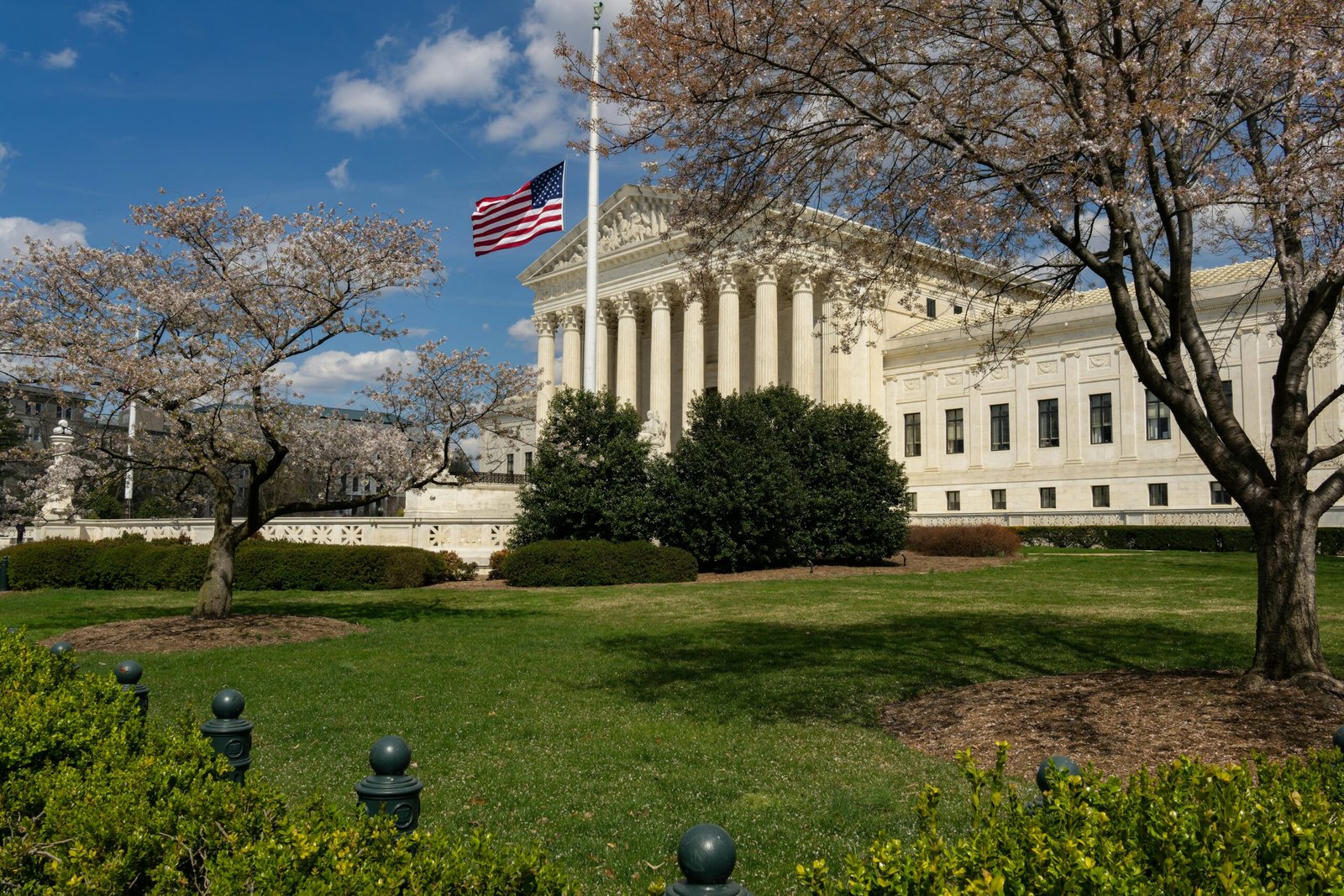
The PASPA repeal on May 14, 2018, struck down a 26-year federal ban on regulated sports betting. The 6–3 ruling in Murphy v. NCAA is the legal foundation of every regulated sportsbook operating in America today.
This article is published for informational and educational purposes only. Legal history and case citations are sourced from US Supreme Court records, the American Gaming Association, and state gaming commission filings. View our full disclosure policy →
The PASPA repeal on May 14, 2018, was the moment the United States Supreme Court reshaped an entire industry. In a 6–3 decision in Murphy v. National Collegiate Athletic Association, the Court declared the Professional and Amateur Sports Protection Act — known as PASPA — unconstitutional, striking down the federal law that had banned regulated sports betting in 46 states for 26 years.
That single ruling is the reason DraftKings, FanDuel, BetMGM, and Caesars now operate across dozens of states. It is the legal foundation of the entire US regulated gambling industry as it exists today. To understand the American iGaming market in 2026, you must first understand PASPA — and why its repeal was such a watershed moment. For a broader market view, see our US iGaming Market Size 2026 guide.
What Was PASPA? The Law That Froze the US Betting Market
The Professional and Amateur Sports Protection Act of 1992 — also called the Bradley Act, named after New Jersey Senator and former NBA star Bill Bradley — was a federal law that effectively outlawed sports betting nationwide, with narrow exceptions for four states: Nevada, Delaware, Montana, and Oregon.
The law was enacted in the aftermath of high-profile sports gambling scandals, most notably the Pete Rose affair, in which the Cincinnati Reds manager was found to have wagered on baseball games. Congress feared that widespread legal sports betting would corrupt the integrity of professional sports. As one legislative record stated, lawmakers worried that legal wagering would change sporting events from “wholesome entertainment for all ages to devices for gambling.”
PASPA did not make sports betting a federal crime for individuals. Instead, it made it unlawful for state governments to authorize, license, or sponsor sports gambling — effectively freezing the regulatory map. Any state that wanted to legalize sports betting was legally blocked from doing so, regardless of what its own voters or legislature decided.
Nevada, already home to Las Vegas, remained the only state where a full-scale legal sports betting market existed. For the next quarter century, it held a monopoly that the rest of the country watched from the sidelines.
The Illegal Market That Grew Anyway
PASPA’s prohibition did not stop Americans from betting on sports. It simply pushed the activity underground.
Before the repeal, the American Gaming Association (AGA) estimated that US bettors were wagering approximately $150 billion per year on sports — yet only about $5 billion of that was happening legally in Nevada. The rest flowed through offshore online platforms, bookmakers, and illegal channels that offered no consumer protections, no age verification, no responsible gaming tools, and no tax revenue for state governments.
Pre-Repeal Reality
Before 2018
$150B
Annual sports betting handle (US total)
$5B
Legal handle (Nevada only)
1
State with full-scale legal market
Post-Repeal Reality
By 2026
$300B+
Cumulative legal handle (since 2018)
$71B
US commercial gaming revenue (2025 Jan–Nov)
39+
States with legal sports betting
The illegal market operated freely for decades while regulated operators were legally barred from entering. This reality became an increasingly powerful argument for PASPA’s opponents: the law was not preventing sports betting. It was simply preventing it from being safe, regulated, and taxed.
New Jersey’s Fight: Six Years in Court
The state that ultimately brought down PASPA was New Jersey — and it took six years of litigation to do it.
In 2011, New Jersey voters approved a state constitutional amendment permitting sports betting. The following year, the state legislature passed the Sports Wagering Act of 2012, authorizing wagering at casinos and racetracks. It was an immediate violation of PASPA, and the NCAA, NFL, NBA, NHL, and MLB quickly sued to block it.
New Jersey lost at the district court level. It lost at the Third Circuit Court of Appeals. The Supreme Court declined to hear its first appeal in 2014.
Undeterred, New Jersey tried a different legal strategy. Rather than authorizing sports betting — which PASPA explicitly prohibited — the state legislature passed a new law in 2014 that repealed portions of existing New Jersey laws that had banned sports gambling. The distinction mattered: the state argued it was simply removing a prohibition, not creating a new authorization.
The leagues sued again. New Jersey lost again at the district court and the Third Circuit, which concluded the partial repeal was effectively equivalent to authorization. But the dissenting opinions in those cases gave New Jersey’s lawyers enough ammunition to petition the Supreme Court once more.
In June 2017, the Supreme Court agreed to hear the case. By this point, New Jersey Governor Chris Christie had left office and was succeeded by Governor Phil Murphy — giving the case its final name: Murphy v. National Collegiate Athletic Association.
The Supreme Court Decision: May 14, 2018
Oral arguments were heard on December 4, 2017. Theodore Olson argued on behalf of New Jersey. Paul Clement represented the NCAA and the professional sports leagues. The US Department of Justice sided with the leagues.
Five months later, the Court delivered its verdict.
May 14, 2018
Murphy v. NCAA — 6–3 Decision
The Supreme Court, in a 6–3 decision delivered by Justice Alito, reversed the Third Circuit and held that PASPA was unconstitutional. The ruling was grounded in the anti-commandeering doctrine of the Tenth Amendment to the US Constitution — the principle that the federal government cannot compel state legislatures to enact or maintain specific laws.
The majority of the Court, led by Justice Samuel Alito, relied on the anti-commandeering doctrine from the Tenth Amendment in making its decision. The Court held that PASPA violated the anti-commandeering doctrine because it prohibited states from allowing their citizens to bet on professional sports.
In a memorable passage, Justice Alito wrote that the federal law’s command to state legislatures represented something to which:
“A more direct affront to state sovereignty is not easy to imagine.”
Justice Samuel Alito · Majority Opinion, Murphy v. NCAA · May 14, 2018
The Court found that there is no meaningful constitutional distinction between the federal government commanding a state to do something and commanding a state not to do something. Both violate the same Tenth Amendment principle.
PASPA, by forbidding states from authorizing sports betting, was forcing state governments to maintain a legal status quo dictated by Congress — and that was unconstitutional.
The holding: provisions of PASPA that prohibit state authorization and licensing of sports gambling schemes violate the Constitution’s anti-commandeering rule; no other PASPA provisions are severable from those provisions. The entire law fell.
The Immediate Aftermath: States Move Fast
The industry’s response to the PASPA repeal was immediate. Within weeks of the ruling, the first legal sports bets outside Nevada were placed in Delaware and New Jersey.
Just weeks later, on June 5, 2018, Delaware became the first state outside Nevada to launch full-scale single-game sports betting. By the end of that year, New Jersey, Rhode Island, Mississippi, West Virginia, Arkansas, and Pennsylvania had also legalized or launched regulated sportsbooks.
The floodgates had opened. State after state moved to draft sports betting legislation — for the current map of legal markets see our state-by-state legal guide — driven by two powerful incentives:
- Tax revenue — legal sports betting generates significant income for state budgets without raising citizen taxes
- Competition — states bordering legal markets risked losing betting revenue to neighbors if they stayed on the sidelines
The Market Transformation: 2018 to 2026
The scale of the PASPA repeal aftermath is difficult to overstate.
Before May 2018: one state (Nevada) with a legal full-scale sports betting market.
By 2026: 39 states, Washington D.C., and Puerto Rico have legalized sports betting in some form — representing more than two-thirds of all US states.
Legal sports wagering has expanded to 34 states and DC and counting as of 2026 and is showing no signs of slowing down. The American Gaming Association previously estimated that sports bettors in the US were wagering $150 billion annually prior to the overturning of PASPA, yet only about $5 billion of that was happening legally — in Nevada.
The US iGaming market now stands at $6.89 billion in 2026. In less than six years since the repeal, regulated sportsbooks took in over $300 billion in cumulative sports betting handle. The illegal market that PASPA could never eliminate was being replaced — step by step, state by state — by a regulated, taxed, consumer-protected alternative.
Revenue Milestones Post-PASPA
| Year | Key Development |
|---|---|
| 2018 | PASPA repealed; Delaware and NJ launch within weeks; 6 states live by year-end |
| 2019 | Pennsylvania, Indiana, Iowa, Oregon, New Hampshire, Montana launch |
| 2020–21 | COVID accelerates shift to mobile; Illinois, Michigan, Virginia, Tennessee go live |
| 2022 | New York launches mobile betting at 51% tax rate; becomes the largest US handle market |
| 2023–24 | Kentucky, North Carolina, Vermont, Maine, and others launch; market surpasses $100B annual handle |
| 2025 | US commercial gaming revenue exceeds $71 billion (Jan–Nov); iGaming grows 28% YoY |
| 2026 | 39+ states legal; Texas, California, Georgia remain the biggest untapped markets |
According to data published by the New York State Gaming Commission, New York alone generated more than $1.76 billion in sports betting tax revenue in fiscal 2023–2024 — more than the combined revenue of several smaller states’ entire gambling markets.
Why the Sports Leagues Opposed PASPA — and What Changed
One of the most remarkable aspects of the post-PASPA era is how completely the professional sports leagues reversed their position.
The NFL, NBA, MLB, NHL, and NCAA were the plaintiffs in the original PASPA case — the organizations that sued New Jersey to keep sports betting illegal. Their stated concern was the integrity of their games.
The Great Reversal
Then (Pre-2018)
NFL, NBA, MLB, NHL, and NCAA were the plaintiffs against legalization, citing concerns about game integrity, athlete corruption, and the “wholesomeness” of professional sports.
Now (Post-2018)
Every major US sports league has official sportsbook partnerships. Team sponsorships, broadcast advertising, and league-level commercial agreements with operators are standard practice.
Today, every major professional sports league in the United States has official sportsbook partnerships. Team sponsorships with betting operators are standard across the NFL, NBA, MLB, and NHL. Sportsbook advertising during live broadcasts has been normalized. The leagues that once fought sports betting tooth and nail are now among its most significant commercial beneficiaries.
The NBA was the exception early — commissioner Adam Silver wrote a New York Times op-ed in November 2014, nearly four years before the ruling, calling for legal, regulated sports betting. His argument was pragmatic: the betting was happening anyway; better to have it regulated and transparent than pushed underground.
PASPA’s Legacy: The State-by-State Model and Its Implications
The PASPA repeal (Murphy decision) did not create a federal framework for sports betting. It simply removed the federal prohibition and returned the decision to each state. The result is the complex, fragmented regulatory landscape that defines the US market today.
Every state that has legalized sports betting has written its own rules — understanding how online casinos get licensed in the US is essential context — its own tax rates, licensing requirements, permitted operators, and consumer protection standards.
New York taxes operators at 51% of gross revenue. Pennsylvania charges 36%. Nevada charges around 6.75%. This creates dramatically different market economics depending on the jurisdiction.
This state-by-state structure has important consequences for the iGaming industry:
- Operators must obtain separate licenses in each state they wish to operate
- Compliance requirements vary significantly across jurisdictions
- Affiliates must geotarget content to players in specific legal states
- Market entry costs are high, favoring well-capitalized operators like DraftKings and FanDuel
- Large states like California, Texas, and Florida represent enormous untapped markets — but face distinct political and legal barriers
For a deeper comparison of the two market leaders that emerged from this regulatory environment, see our DraftKings vs FanDuel 2026 guide.
From Sports Betting to iGaming: The Continuum
The PASPA repeal opened the door not just to sports betting but to the broader legalization conversation around online casino gaming (iGaming). While sports betting and iGaming are governed by separate legislation at the state level, the political and economic arguments that drove sports betting legalization — tax revenue, consumer protection, recapturing illegal market dollars — apply equally to online casinos.
States that successfully regulated sports betting gained institutional knowledge, established regulatory infrastructure, and built political consensus that made iGaming legalization more achievable. Pennsylvania, Michigan, New Jersey, Connecticut, West Virginia, and Rhode Island — all states with active iGaming markets — had pre-existing or concurrent sports betting frameworks that paved the way.
The era after the PASPA repeal didn’t just create a sports betting market. It created a template for regulated digital gambling in America.
The Remaining Frontier: States Still Holding Out
Despite the dramatic expansion since 2018, significant portions of the US population still live in states without legal sports betting:
Texas
Requires constitutional amendment; conservative opposition remains strong; legislative path possible only in 2027 session
California
Constitutional Amendment 3 (2018) requires statewide voter approval; tribal and commercial operator conflicts have stalled all ballot measures
Georgia
Most closely watched state for 2026–2027; would require voter referendum; strong sports culture provides tailwind
AL / AK / UT
Among the most restrictive gambling states; no meaningful movement on sports betting or iGaming legislation
The remaining holdout states represent the last major growth frontier for the US regulated gambling market — and the operators, affiliates, and media companies best positioned to serve those markets when they legalize will benefit most.
Frequently Asked Questions
What is PASPA and when was it repealed?
The Professional and Amateur Sports Protection Act (PASPA) was a 1992 US federal law that banned states from authorizing or licensing sports betting, with narrow grandfathered exceptions for Nevada, Delaware, Montana, and Oregon. The Supreme Court struck it down on May 14, 2018, in Murphy v. NCAA.
Why did the Supreme Court rule PASPA unconstitutional?
The Court ruled 6–3 that PASPA violated the Tenth Amendment’s anti-commandeering doctrine, which prohibits the federal government from forcing state legislatures to maintain specific laws. By forbidding states from authorizing sports betting, PASPA effectively commandeered state governments to enforce a federal policy preference.
How many states have legal sports betting in 2026?
As of 2026, 39 US states plus Washington D.C. and Puerto Rico have legalized sports betting in some form. The largest holdouts are Texas, California, and Georgia, which together represent over 80 million potential adult bettors not yet served by regulated markets.
Did PASPA’s repeal also legalize online casino gaming (iGaming)?
No. The Murphy ruling only struck down the federal prohibition on sports betting. Online casino gaming (iGaming) is regulated separately at the state level and is currently legal in only seven states: New Jersey, Pennsylvania, Michigan, Connecticut, Delaware, West Virginia, and Rhode Island.
What was the role of New Jersey in the PASPA repeal?
New Jersey led the legal challenge against PASPA for over six years, losing at multiple levels before the Supreme Court ultimately accepted the case. Governor Phil Murphy was in office when the ruling came down, giving the case its final name. New Jersey’s persistent litigation is widely credited as the driving force behind the law’s eventual repeal.
Official Sources & Further Reading
Primary Sources
- Supreme Court — Murphy v. NCAA Full Opinion (PDF)
- American Gaming Association — Sports Wagering Research
- US Department of Justice — Professional and Amateur Sports Protection Act
- New York State Gaming Commission — Official Reports
- National Council on Problem Gambling — Resources
Key Takeaways
- PASPA (1992–2018) banned regulated sports betting in 46 states for 26 years
- The Supreme Court struck it down in Murphy v. NCAA on May 14, 2018, ruling it violated the Tenth Amendment
- New Jersey’s six-year legal battle was the driving force behind the case
- Before the repeal, ~$150B was wagered annually in the US — only ~$5B legally
- By 2026, 39+ states have legalized sports betting; over $300B has been wagered legally since 2018
- The state-by-state regulatory model created by Murphy shapes every aspect of iGaming compliance and business strategy today
- PASPA’s repeal created the regulatory and political foundation for the broader iGaming legalization wave still unfolding
Legal Disclaimer & Editorial Notice
Not Legal Advice. This article is published for informational and educational purposes only. Nothing on this page constitutes legal advice or a legal opinion of any kind. No attorney-client relationship is created by reading this content. Always consult a licensed attorney in your state before making decisions based on information found here.
Accuracy Notice. Gambling laws, licensing requirements, and regulations change frequently at both state and federal levels. While we make every effort to keep our content accurate and up to date, Regulated Gaming US cannot guarantee the completeness or current validity of any information published. Readers are solely responsible for verifying all information with the relevant state gaming commission or a qualified legal professional.
State Variation. Online gambling laws vary significantly by state. Information accurate for one jurisdiction may not apply to yours. Always check your state’s current legal status before participating in any form of online gambling.
No Liability. Regulated Gaming US and its contributors expressly disclaim all liability for any actions taken based on the content of this article. Use of this information is entirely at your own risk.
Affiliate Disclosure. Some links on this page may become affiliate links once partnership approvals are completed. We may earn a commission if you register through our links, at no additional cost to you. This does not influence our editorial content or opinions. We only recommend licensed, state-regulated operators.
This site does not provide financial, legal, or professional advice. Editorial content reflects the opinions of our team and is not a recommendation regarding investments, business decisions, or legal compliance matters.
Responsible Gaming. Must be 21+ to participate in real-money gambling. If you or someone you know has a gambling problem, free and confidential help is available 24/7 — call or text 1-800-522-4700 or 1-800-GAMBLER · ncpgambling.org · Responsible Gaming Policy